


Khijadiya Bird Sanctuary: Best 2026 Guide
Part of our complete Jamnagar city guide.
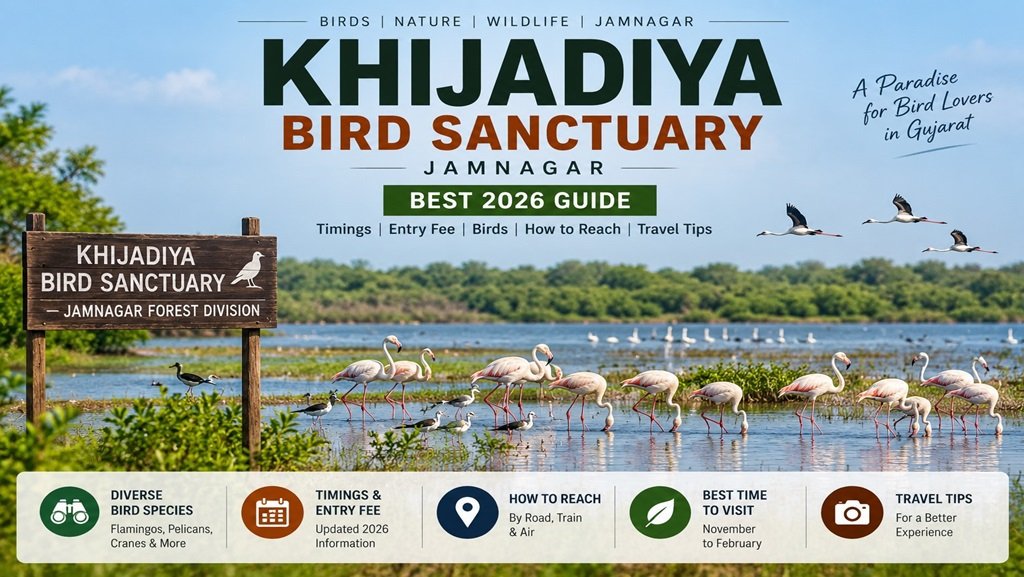
Khijadiya Bird Sanctuary is a wetland reserve about 12 km northeast of Jamnagar city, spread across freshwater lakes, mudflats, and mangrove edges where the land meets the Gulf of Kutch. It’s one of the few places in Gujarat where you can watch flamingos, pelicans, and cranes from a bund road without a boat or a guide. Winter is the season that matters here — everything else in this guide is built around that fact.
Khijadiya Bird Sanctuary Timings and Entry Fee
The sanctuary opens early and shuts before dark, since there’s no lighting inside and the paths run along water on both sides. Gates generally open around 7:00 AM and close by 6:00 PM, though forest department staff sometimes adjust this by season. Don’t plan a night visit — it isn’t allowed, and there’s nothing to see after sunset anyway.
- Entry fee: a modest per-person charge for Indian visitors, higher for foreign nationals
- Camera fee: extra charge for still cameras, more for video
- Vehicle entry: small parking charge near the entrance
Exact rupee figures change from year to year, so treat any number you see online as approximate. Carry small cash. There’s no card machine at the gate.
Best Time to Visit
November through February is peak season. That’s when migratory birds arrive from Central Asia and Siberia, and the lakes are full after the monsoon. Visit early morning, right after the gate opens — birds are most active then, and the light is better for photos too. By April, water levels drop and a lot of the migratory activity has already moved on.
Birds You Can See at Khijadiya Bird Sanctuary
This is a genuine birder’s stop, not just a scenic detour. Khijadiya Bird Sanctuary is a Ramsar-listed wetland, meaning it’s recognised internationally for its importance to waterbirds, and the species list backs that up.
| Bird | When to spot |
|---|---|
| Greater and Lesser Flamingo | Winter, on the shallow lakes |
| Painted Stork | Winter through early spring |
| Pelicans | Winter |
| Sarus Crane | Occasional, near the freshwater edge |
| Marsh Harrier and other raptors | Winter mornings |
| Ducks, coots, and waders | Winter, in large numbers |
Resident species — kingfishers, herons, egrets — are around most of the year. Bring binoculars if you have them. The sanctuary doesn’t rent equipment, and the birds keep their distance.
How to Reach Khijadiya Bird Sanctuary
Getting there is straightforward if you’re already in Jamnagar. It isn’t walkable, though. You’ll need a vehicle.
By Road
The sanctuary is roughly 12 km from Jamnagar city centre, off the road toward Dwarka. Autos and taxis both make the trip; agree on a fare before you get in, and ask the driver to wait if you want a return ride, since there’s little traffic passing the gate for a return pickup. Self-driving is easy too — the road is in decent shape most of the year.
By Train and Air
Jamnagar Railway Station and Jamnagar Airport both connect to the rest of Gujarat and to Mumbai. From either, it’s a short cab ride into the city, and then the same 12 km run out to the sanctuary. There’s no direct rail or air link to Khijadiya itself — Jamnagar is always the base.
Tips for a Better Visit
- Wear neutral colours. Bright clothing spooks the birds before you’re close enough to see them well.
- Carry water and a cap — there’s minimal shade along the bund paths.
- Keep quiet near the lakes. Loud groups scatter flocks fast.
- Check with local sources before a monsoon visit; some paths flood and access can be limited.
Pair the trip with other wildlife time in the region. Vantara Jamnagar is a different kind of wildlife experience nearby, focused on rescued animals rather than migratory birds, and worth a separate half-day.
Where to Stay and Eat Nearby
Most visitors base themselves in Jamnagar city and drive out for a morning at the sanctuary. For places to stay, see this list of the best hotels in Jamnagar. After the visit, Jamnagar has solid food options too — check this roundup of the best restaurants in Jamnagar for lunch spots that won’t eat up your afternoon.
If you’re building a longer city itinerary, the Bhidbhanjan Mahadev Temple makes a good stop on the same day, since it sits well within the city and doesn’t need a full morning like the sanctuary does.
FAQ
What are the timings of Khijadiya Bird Sanctuary?
The sanctuary is generally open from around 7:00 AM to 6:00 PM, with no visits allowed after dark. Timings can shift slightly by season, so it helps to arrive early rather than cutting it close to closing time.
What is the entry fee for Khijadiya Bird Sanctuary?
There’s a modest entry fee for Indian visitors and a higher one for foreign nationals, plus a small extra charge if you bring a camera. Fees are revised occasionally, so carry cash and expect the exact amount to vary slightly from what you read online.
Which is the best time to visit Khijadiya Bird Sanctuary?
November to February, during peak migratory season, is the best window. Early morning visits within that period give you the most bird activity and the calmest light.
How far is Khijadiya Bird Sanctuary from Jamnagar city?
About 12 km. It’s a short taxi or auto ride, and the road is manageable for self-driving as well.
Is Khijadiya Bird Sanctuary good for a family visit?
Yes, with a few caveats. The walking paths are flat and easy, but there’s little shade, so carry water and a hat for kids and older visitors. Keep noise down near the lakes so everyone actually gets to see the birds.
For background on the wetland’s ecology and Ramsar status, see Wikipedia’s entry on Khijadiya Bird Sanctuary, the Gujarat Tourism website, and the Ramsar Convention site for more on wetlands of international importance.
Khijadiya Bird Sanctuary: Common Questions
Where is Khijadiya Bird Sanctuary?
About twelve kilometres north-east of Jamnagar, close enough to visit on a morning trip and be back for lunch.
What makes Khijadiya Bird Sanctuary special?
Freshwater and saltwater systems sit side by side, which is why the bird diversity is unusually high. It is a Ramsar site of international importance.
What is the best time to visit?
November to February, during the migratory season. Outside those months the numbers drop sharply.
What time of day should I go?
First light. Bird activity is highest early, and the light is better for watching and photography.
Do I need a guide or binoculars?
Binoculars make an enormous difference. A guide helps considerably with identification, though the site is straightforward to visit.