

Jamnagar City: A Complete Guide to Gujarat’s Brass Capital
Jamnagar is a coastal city in the Saurashtra region of Gujarat, India, sitting on the southern shore of the Gulf of Kutch. Locals know it by three nicknames that between them explain the whole place: Chhota Kashi for its temples, the Brass City of India for its workshops, and the Oil City for the refining complex on its edge. This guide covers everything about Jamnagar city in one place: its history, what it is famous for, the best places to visit, where to eat and stay, how to reach it, and how to find any local business through our directory.
Jamnagar at a Glance
| City | Jamnagar (formerly Nawanagar) |
|---|---|
| State / Region | Gujarat, India — Saurashtra (Kathiawar peninsula) |
| District | Jamnagar district (district headquarters) |
| Founded | 1540, by Jam Rawal, as Nawanagar |
| Known as | Chhota Kashi, Brass City of India, Oil City, Jewel of Kathiawar |
| Location | On the Gulf of Kutch coast, north-west Gujarat |
| Population | About 6 lakh in the urban area (Census of India, 2011) |
| Languages | Gujarati (Kathiawadi dialect), Hindi, English |
| PIN codes | 361001 onwards |
| STD code | 0288 |
| Vehicle registration | GJ-10 |
| Airport | Jamnagar Airport (IATA: JGA), a civil enclave |
| Railway station | Jamnagar, Western Railway (Rajkot–Okha line) |
| Known for | Brass parts, oil refining, Ayurveda, bandhani, temples, marine wildlife |
| Best time to visit | October to March |
About Jamnagar City
Jamnagar is one of the larger cities of Saurashtra and the headquarters of its district. It grew up around a walled old town of gates, bazaars and stepwells, and it has since spread outward into wide colonies, industrial estates and a long coastal belt facing the Gulf of Kutch. The result is a city with two very different characters. Inside the old town you get narrow lanes, brass workshops, bandhani shops and temple bells. Outside it you get refineries, an air force station, a large university campus and highway-side hotels.
For visitors, Jamnagar is usually a two-day stop: a heritage lake and palace in the middle of the city, a dense cluster of temples, a marine national park nearby, and Dwarka only a couple of hours further west. For residents, it is a working industrial city where brass, oil, textiles and Ayurveda are the four pillars that most families are connected to in some way.
Looking for a specific shop, hotel, doctor or service? Skip ahead to the business directory section below, or browse all business listings in Jamnagar.
History of Jamnagar: From Nawanagar to Today
The city was founded in 1540 by Jam Rawal, a Jadeja Rajput ruler who crossed over from Kutch and established a new capital on the banks of the Rangmati and Nagmati rivers. He called it Nawanagar, which simply means “new town”. The rulers took the title Jam Saheb, and over time the town became known by the ruler’s title: Jam-nagar, the town of the Jam.
Nawanagar became one of the most prominent princely states of Kathiawar. Two of its rulers are remembered far beyond Gujarat:
- Jam Ranjitsinhji — the cricketer who played for England and later ruled Nawanagar. India’s premier domestic cricket tournament, the Ranji Trophy, is named after him. His nephew Duleepsinhji, also a Nawanagar prince and Test cricketer, gave his name to the Duleep Trophy. Ranjitsinhji is also credited with much of modern Jamnagar’s planning, which is why the city is sometimes called the Jewel of Kathiawar.
- Jam Saheb Digvijaysinhji — remembered internationally as the “Good Maharaja” for sheltering hundreds of Polish refugee children at Balachadi, near Jamnagar, during the Second World War. Poland has honoured him with memorials and a square named after him in Warsaw.
Nawanagar merged into the Indian union after independence and the city was renamed Jamnagar. The old royal quarter, Darbargadh, and the semicircular market known as Willingdon Crescent (Chandi Bazaar) still mark the historic core, along with surviving city gates such as Khambhaliya Gate and Bedi Gate.
Why Is Jamnagar Famous? 8 Things It Is Known For
Places to Visit in Jamnagar
Most of the sights are within the city itself and can be covered on foot or with a short auto ride. The wildlife destinations need half a day and, in some cases, a permit. Official state-level travel information is published by Gujarat Tourism.
1. Lakhota Palace and Museum
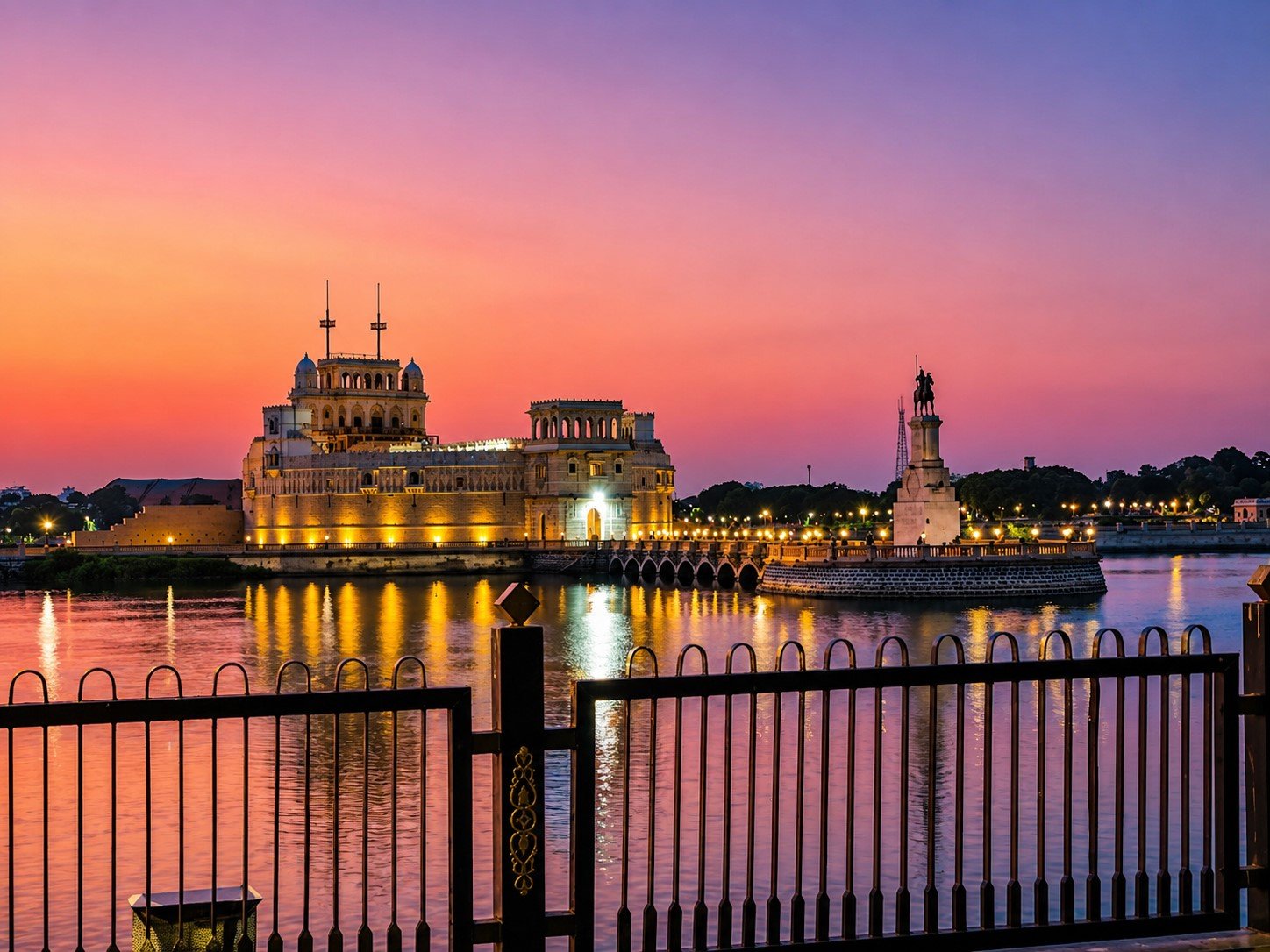
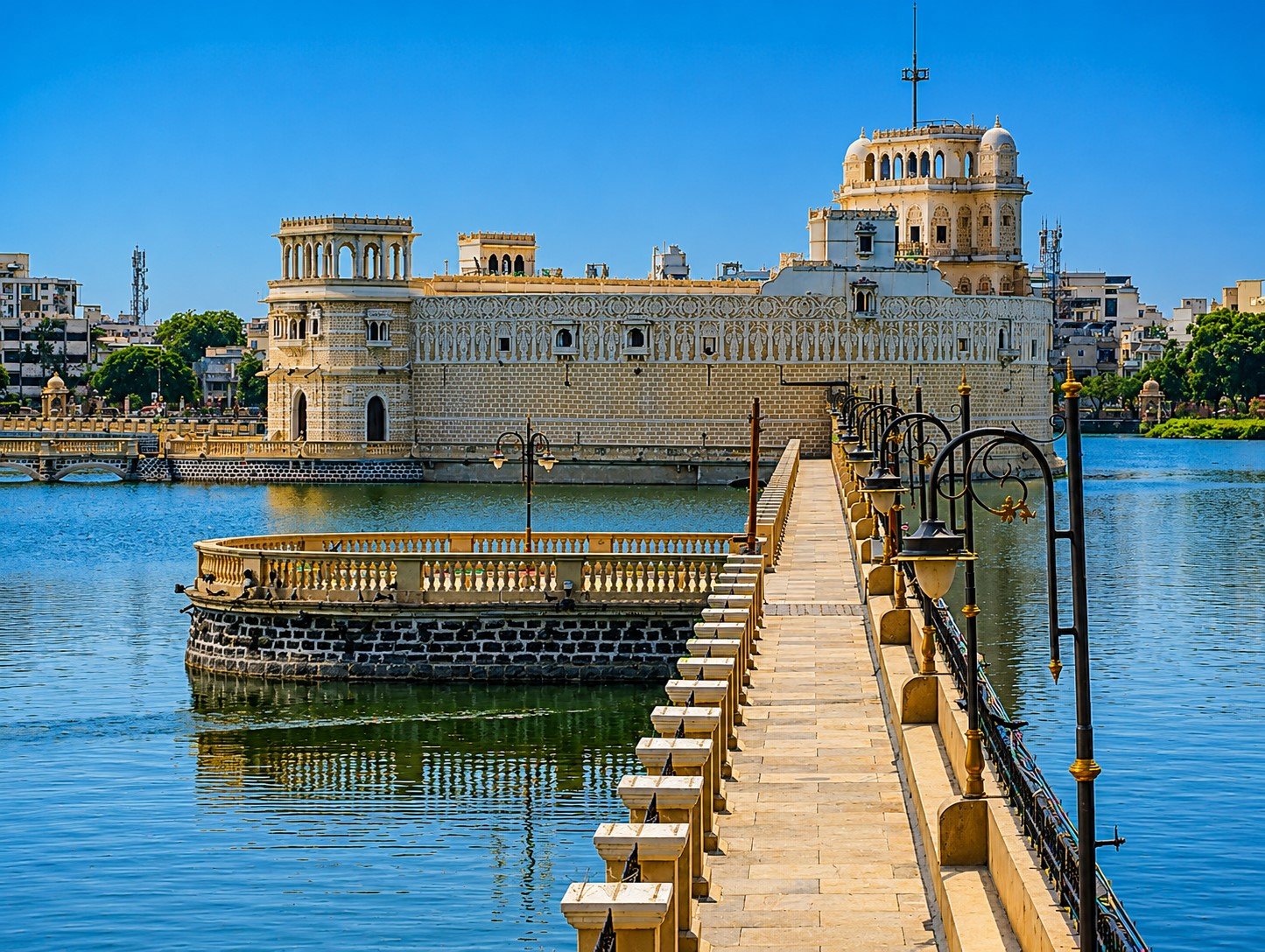
The signature image of the city: a small circular fort-palace sitting in the middle of Ranmal Lake (also called Lakhota Lake), reached by a stone causeway. Built by Jam Ranmalji II in the nineteenth century, it now houses a museum of sculptures, weapons, pottery and local finds. The lakeside walkway around it is where the whole city comes for an evening stroll, and the palace lit up after sunset is the best photograph you will take here. Details, timings and directions: Lakhota Palace and Museum, Jamnagar.
2. Bhujio Kotho
The tall stone tower standing at the edge of the same lake. It was built as a water tower and lookout and is one of the oldest surviving structures of the old town. Best seen together with Lakhota on the same walk around Ranmal Lake.
3. Bala Hanuman Temple
On the eastern side of Ranmal Lake, this temple holds a Guinness World Record for the continuous chanting of “Shri Ram, Jai Ram, Jai Jai Ram”, which has gone on without a break since 1 August 1964. Standing in the courtyard while the chant runs is the most memorable half hour you will spend in the old city. See Bala Hanuman Temple, Jamnagar.
4. Marine National Park, Gulf of Kutch
India’s first marine national park, spread over a chain of islands and intertidal reefs off the coast north of the city. At low tide you can walk out over living coral, sponges, octopus, sea anemones and starfish at Narara Bet, or take a boat to Pirotan Island. Pirotan requires prior permission from the Gujarat Forest Department, so plan it in advance and go with a licensed guide who knows the tide table.
5. Khijadiya Bird Sanctuary
A wetland where freshwater and saltwater habitats sit side by side, which is why the bird list here is so long. It is a designated Ramsar site of international importance. Winter, from November to February, is the season for migratory flocks including flamingos, pelicans and cranes.
6. Darbargadh and Willingdon Crescent
The old palace complex and the semicircular colonnaded market beside it, in the heart of the old city. This is also the best area for buying bandhani, brass items and local sweets, and for eating your way through the street food stalls in the evening.
7. Bedi Port and the coast
Bedi, north of the centre, is the city’s old port area. Further along the coast are quiet beaches such as Balachadi, which is also where the Polish children’s camp stood during the Second World War.
8. Dwarka, as a day trip
The city is the most convenient base for visiting Dwarka, roughly 130 km west, along with the Nageshwar Jyotirlinga and Bet Dwarka. It is a comfortable day trip by road, and one reason many pilgrims stay here overnight.
Browse every attraction we have documented: places to visit in Jamnagar.
Temples in Jamnagar: The Chhota Kashi Circuit
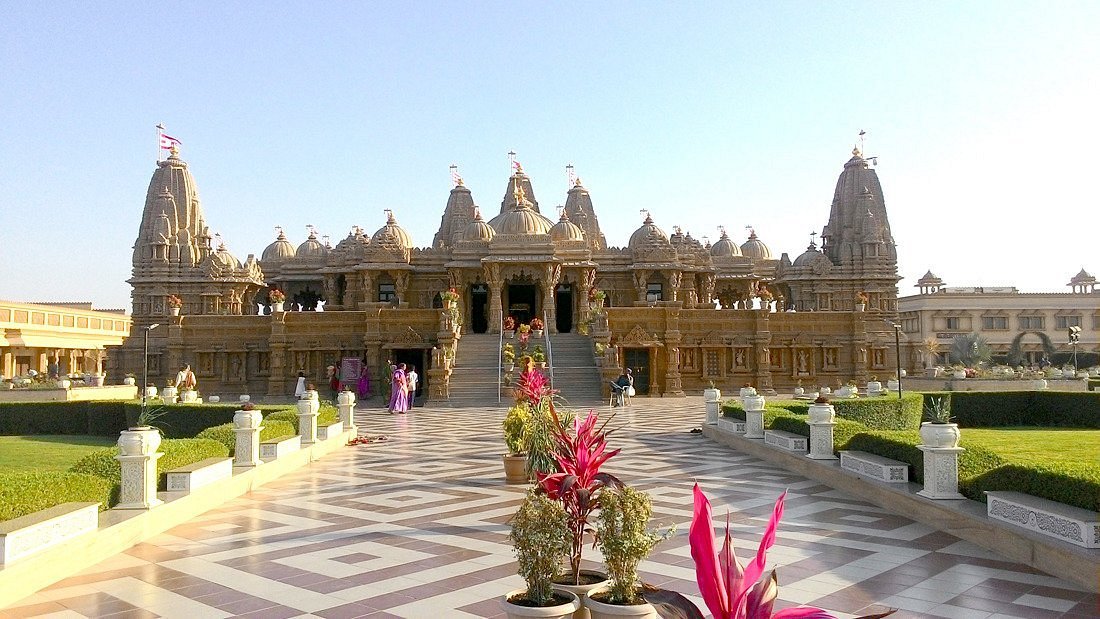
The city is called Chhota Kashi because of how many temples are packed into the old city. If you want a walkable half-day circuit, these are the ones to cover:
- Bala Hanuman Temple — the non-stop Ram Dhun, and the lakeside setting.
- Shree Swaminarayan Temple — one of the historic Swaminarayan mandirs of Gujarat, with fine carving and a large courtyard.
- Bhidbhanjan Mahadev Temple — an old Shiva temple that fills up on Mondays and during Shravan.
- Siddhnath Mahadev Temple — another long-standing Shiva shrine in the old quarter.
- Sai Baba Temple — a modern and very popular temple with large Thursday gatherings.
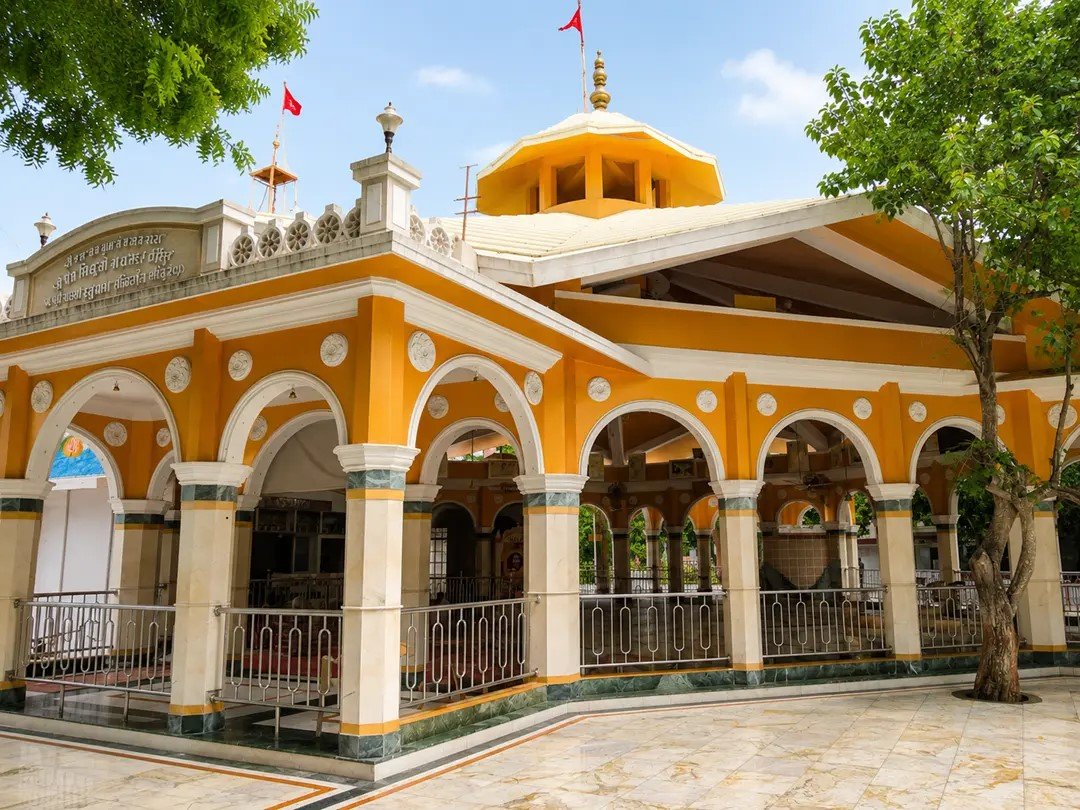
Full list with timings and directions: temples in Jamnagar.
Food in Jamnagar: What to Eat and Where
Jamnagar eats Kathiawadi. That means a thali heavy on bajra rotla, garlic chutney, sev tameta, khichdi and buttermilk, plus the Gujarati sweet-and-spicy balance in almost everything. The things worth going out of your way for:
Kathiawadi thaliGhughraKachoriFafda and jalebiDabeliGathiyaIce cream and faloodaCutting chai
Breakfast here means fafda-jalebi or ganthiya at a corner shop. Evenings belong to the street food carts near the old city and along the main roads, and to the rooftop and family restaurants that have opened up around Patel Colony and the highway. The city also has a strong pure-vegetarian tradition, so vegetarian travellers have an easy time here.
Festivals and Culture in Jamnagar
The calendar here follows the temples. The old city fills up on the big days, shops shut early, and streets that are ordinary the rest of the year turn into processions and food stalls. If you can time a visit to one of these, do.
| Janmashtami (Aug–Sep) | Krishna’s birthday is the biggest night of the year in a city this close to Dwarka. Temples stay open past midnight and the old quarter does not sleep. |
|---|---|
| Navratri (Sep–Oct) | Nine nights of garba in society grounds, clubs and open plots across every colony. This is Gujarat’s signature festival and the city takes it seriously. |
| Shravan (Jul–Aug) | The holy month for Shiva. Bhidbhanjan, Siddhnath and the other Mahadev temples run queues down the lane every Monday. |
| Uttarayan (14 January) | Kite festival. Terraces fill from sunrise, the sky goes solid with kites, and undhiyu and chikki appear in every household. |
| Diwali (Oct–Nov) | The retail peak. Bazaars around Chandi Bazaar and Darbargadh stay lit and busy for a fortnight. |
Crafts and everyday culture
Two crafts define the place. Bandhani, the tie-and-dye work done by hand thousands of knots at a time, is still made and sold in the old bazaars, and a good bandhani odhani from here is the standard wedding gift across Saurashtra. Brass is the other, less decorative but far larger: a walk through the industrial estates on a working morning is its own kind of sightseeing.
Day to day, the culture is Kathiawadi and vegetarian, conversation happens over cutting chai at a corner tapri, and the evening walk around Ranmal Lake is close to a civic ritual. Gujarat is a dry state, so nightlife means late food rather than bars. People are generally happy to help a visitor find an address, and a few words of Gujarati go a long way.
Where to Stay in Jamnagar
The city’s hotels fall into three broad groups. Business and branded hotels sit along the main roads and near the airport, and are used mainly by people visiting the refineries and the brass industry. Mid-range residency-style hotels cluster around the city centre, Teen Batti and Patel Colony, and are the best value for tourists. Budget lodges are concentrated near the railway station and the old bus stand, which is convenient if you are catching an early train to Dwarka.
Because the city runs on industrial visitors, weekday occupancy is often higher than weekends, and rooms get tight during major festivals and wedding season. If you are coming for Janmashtami or Navratri, book early.
Business and Economy in Jamnagar
Four industries carry the local economy, and each one shapes a different part of the city.
Brass
Jamnagar is the brass capital of India. The belt running through Dared, Shankar Tekri and the surrounding GIDC estates holds thousands of small and medium units producing brass parts, electrical fittings, sanitary hardware, valves and precision components, a large share of which is exported. If you are sourcing brass in India, this is the address.
Oil and petrochemicals
The refining and petrochemical complex on the coast near Motikhavdi, along with the terminals around Vadinar and Sikka, makes this stretch of coast one of India’s most important energy hubs. It brings a steady flow of engineers, contractors and business travellers into the city all year.
Ayurveda and healthcare
The city has been a centre of Ayurvedic teaching and research for decades, anchored by the Gujarat Ayurved University campus and the Institute of Teaching and Research in Ayurveda (ITRA). Alongside it, the city has a large civil hospital, a government medical college and a dense network of private clinics, diagnostic labs and pharmacies.
Textiles, bandhani and retail
Bandhani work, embroidery and the Digjam woollen mill legacy give the city a long textile tradition, and the old bazaars around Chandi Bazaar and Darbargadh are still the retail heart of the city, alongside newer showrooms on Indira Marg and Ranjit Sagar Road.
Run a business in Jamnagar? Add your business to the directory so local customers searching for your service can find you.
Areas and Localities in Jamnagar
Knowing the local geography makes everything easier, whether you are booking a hotel, hunting for a shop or giving an auto driver directions. These are the names you will hear most often:
| Old city core | Darbargadh, Chandi Bazaar, Teen Batti, Khambhaliya Gate, Bedi Gate, Grain Market |
|---|---|
| Central residential | Patel Colony, Park Colony, Panchvati, Gulabnagar, Summair Club Road, Pandit Nehru Marg |
| Growing suburbs | Khodiyar Colony, Ranjit Sagar Road, Nirmala Convent Road, Indira Marg, Digjam Circle |
| Industrial belt | Dared, Shankar Tekri, GIDC estates, Hapa, Lalpur Road |
| Coastal and outskirts | Bedi, Bedeshwar, Sikka, Vadinar, Balachadi, Motikhavdi |
| Nearby towns | Dhrol, Kalavad, Khambhalia, Jamjodhpur, Jodiya, Lalpur |
You can also see everything mapped: Jamnagar business map.
How to Reach Jamnagar
By air
Jamnagar Airport (IATA code JGA) is a civil enclave a short drive from the city centre, with a limited schedule of domestic flights, most commonly to and from Mumbai. If flight timings do not suit you, Rajkot is the nearest larger airport, around 90 km away by road.
By train
Jamnagar railway station is on the Western Railway’s Rajkot–Okha line and is well connected to Ahmedabad, Rajkot, Vadodara, Surat and Mumbai, with long-distance trains running through to Delhi and beyond. Live timings and seat availability are on the Indian Railways enquiry portal. Trains toward Dwarka and Okha make it a natural overnight stop for pilgrims.
By road
National Highway 27 passes through Jamnagar, connecting it to Rajkot in one direction and Porbandar and the western coast in the other. State transport and private buses run frequently to all major Gujarat cities. Approximate road distances by car:
| Rajkot | About 90 km, roughly 1.5 to 2 hours |
|---|---|
| Dwarka | About 130 km, roughly 2.5 hours |
| Porbandar | About 160 km, roughly 3 hours |
| Ahmedabad | About 300 km, roughly 5 to 6 hours |
| Somnath | About 230 km, roughly 4.5 hours |
| Bhuj | About 250 km, roughly 5 hours |
Getting around the city
Auto rickshaws are the default way to move around the city and are cheap for short hops inside the city. Shared autos run along the main routes, app-based cabs have limited availability, and rented two-wheelers are common for longer stays. The old city is best explored on foot, because the lanes are narrow and parking is difficult.
Weather in Jamnagar and the Best Time to Visit
The city has a hot, semi-arid coastal climate, moderated a little by the sea breeze off the Gulf of Kutch.
| Winter (November to February) | The best season. Pleasant days, cool mornings, and the peak time for migratory birds at Khijadiya. This is when to plan a trip. |
|---|---|
| Summer (March to June) | Hot and dry, with the sharpest heat in May. Sightseeing is best kept to early morning and after sunset. |
| Monsoon (June to September) | Rain arrives with the south-west monsoon. The countryside turns green and the lakes fill up, but coastal trips and boat rides can be disrupted. |
The short answer: October to March is the best time to visit Jamnagar. If you want the marine national park at its most rewarding, aim for a winter low tide and check the tide timings before you go.
A Simple 2-Day Jamnagar Itinerary
Day 1 — The city
Morning: Start with fafda-jalebi, then Lakhota Palace and Museum and a walk around Ranmal Lake, including Bhujio Kotho. Midday: Bala Hanuman Temple for the Ram Dhun, then a Kathiawadi thali lunch. Afternoon: The old city on foot — Darbargadh, Willingdon Crescent and Chandi Bazaar for bandhani and brass. Evening: Swaminarayan Temple, then street food and the lakeside promenade after dark.
Day 2 — The coast and wildlife
Early morning: Khijadiya Bird Sanctuary, which is at its best just after sunrise, or Narara Bet in the Marine National Park if the low tide falls in the morning. Afternoon: Back into the city for the temples you missed, or drive out to Balachadi. Option: Swap day 2 for a full-day trip to Dwarka, Nageshwar and Bet Dwarka.
Useful Information for Visitors and Residents
| Emergency (all services) | 112 |
|---|---|
| Police | 100 |
| Fire | 101 |
| Ambulance | 108 |
| STD code | 0288 |
| PIN code range | 361001 onwards |
| Local body | Jamnagar Municipal Corporation |
| Main languages | Gujarati, Hindi, English |
| Alcohol | Gujarat is a dry state. Visitors need a permit, so plan accordingly. |
| Cash and cards | UPI is accepted almost everywhere, including small shops and autos. Carry some cash for the old bazaars. |
Find Any Business in Jamnagar City
This site is a local directory built for Jamnagar. Every listing carries photos, an address, a phone number, opening hours and directions, so you can find and contact a business in one step instead of hunting across five websites.
Own a business in Jamnagar?
Get found by local customers searching for what you offer. Listing your business takes a few minutes.
Frequently Asked Questions About Jamnagar
What is Jamnagar famous for?
The city is famous for four things above all: it is the largest brass parts manufacturing cluster in India, it hosts the world’s largest oil refining complex on its outskirts, it is India’s leading centre for Ayurvedic education and research, and it is called Chhota Kashi for the number of temples in its old city. It is also known for Jamnagari bandhani fabric, the Marine National Park in the Gulf of Kutch, and its cricket heritage through the Ranji and Duleep Trophies.
Why is Jamnagar called Chhota Kashi?
Because of the sheer density of temples in the old city and the strength of its religious traditions, the city is compared with Kashi (Varanasi) and called “Little Kashi”. The best-known example is Bala Hanuman Temple, where the chanting of “Shri Ram, Jai Ram, Jai Jai Ram” has continued without a break since 1 August 1964, a feat recorded in the Guinness World Records.
Is Jamnagar worth visiting?
Yes, especially as a two-day stop. You get a heritage lake and palace in the middle of the city, a walkable old town with bazaars and temples, India’s first marine national park and a Ramsar-listed bird sanctuary within an hour, and Dwarka close enough for a day trip. It suits travellers who want heritage and wildlife without crowds more than those looking for nightlife or resorts.
What are the best places to visit in Jamnagar?
Lakhota Palace and Museum on Ranmal Lake, Bhujio Kotho, Bala Hanuman Temple, the Swaminarayan and Mahadev temples of the old city, Darbargadh and Willingdon Crescent, the Marine National Park at Narara Bet or Pirotan Island, and Khijadiya Bird Sanctuary. Dwarka, Nageshwar and Bet Dwarka make an easy day trip from the city.
What is the best time to visit Jamnagar?
October to March. Winter has the most comfortable weather and is also the migratory bird season at Khijadiya. Summer, from March to June, is hot and dry, and the monsoon between June and September can interrupt coastal and boat trips.
How do I reach Jamnagar?
By air into Jamnagar Airport (JGA), which has limited domestic flights, with Rajkot around 90 km away as the larger alternative. By train to the city’s station on the Rajkot–Okha line, connected to Ahmedabad, Mumbai and Delhi. By road via National Highway 27, with Rajkot about 90 km away, Dwarka about 130 km and Ahmedabad about 300 km.
Which language is spoken in Jamnagar?
Gujarati, in its Kathiawadi dialect, is the everyday language. Hindi is widely understood, and English is common in hotels, hospitals and the industrial sector.
What food is Jamnagar known for?
Kathiawadi vegetarian cooking: bajra rotla with garlic chutney, sev tameta, khichdi and chaas, along with ghughra, kachori, fafda-jalebi, gathiya and dabeli from the street stalls. The city is strongly vegetarian, so vegetarian travellers have plenty of choice. See our best restaurants in Jamnagar guide.
Which district is Jamnagar in?
It is the headquarters of Jamnagar district in the Saurashtra region of Gujarat. The district also includes towns such as Dhrol, Kalavad, Jamjodhpur, Lalpur, Jodiya and Sikka.
How many days are enough for Jamnagar?
Two days cover the city and one nearby wildlife destination comfortably. Add a third day if you want to include Dwarka, Nageshwar and Bet Dwarka, or if you plan a boat trip to Pirotan Island, which needs forest department permission arranged in advance.
Where can I find local businesses and services in Jamnagar?
Use this directory. You can browse hotels, restaurants, temples, places to visit and shops, or open the Jamnagar business map to see everything by location.
Last updated: August 2026. Timings and contact details change, so please confirm with the business before you travel.