

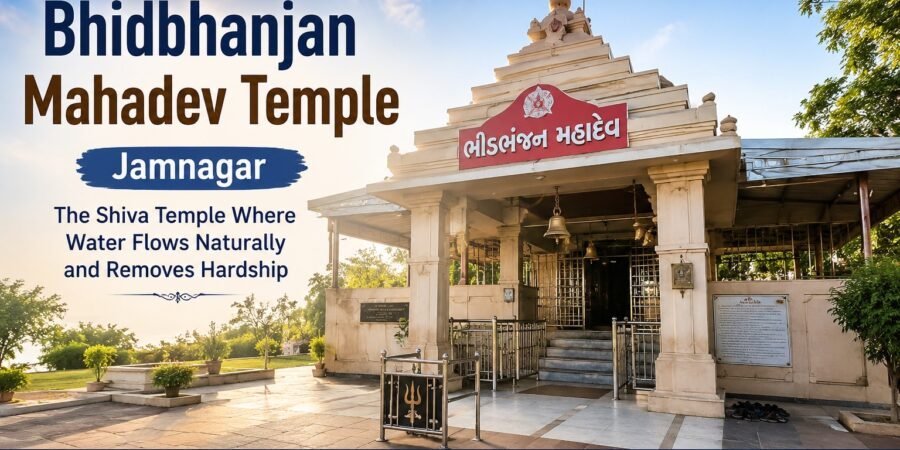
Bhidbhanjan Mahadev Temple is one of Jamnagar’s most visited Shiva shrines, drawing local devotees through the week and large crowds during Shravan month and Mahashivratri. The name itself explains its appeal: “bhid” means trouble or crowding difficulty, and “bhanjan” means one who destroys it, so the temple is believed by devotees to remove obstacles and hardship for those who pray here.
If you are planning a visit, this guide covers what the temple is known for, when to go, how to get there, and what else you can combine into the same trip around Jamnagar.
What Is Bhidbhanjan Mahadev Temple?
The temple is dedicated to Lord Shiva and sits within Jamnagar city, a town in Gujarat known for its old temples, the Lakhota Lake area, and its Ayurveda and jewellery trade. Like many Shiva temples in the region, the sanctum houses a shivling as the main deity, with a mandap for devotees to sit and offer prayers.
Locals consider it a temple for relief from difficulties, illness, and delays in important life events, which is why it sees a steady stream of visitors outside the big festival days as well.
History and Significance of Bhidbhanjan Mahadev Temple
Exact construction dates for many of Jamnagar’s older neighbourhood temples are not well documented in public records, and Bhidbhanjan Mahadev Temple falls in that category. What is well established locally is its long-standing reputation as a place people turn to during personal crises, and its role as a community gathering point during Shiva-related festivals.
Over the years the temple has become a fixture of everyday religious life in Jamnagar, alongside better-documented sites in the city. If you are interested in the broader history of Jamnagar and its temple architecture, the Wikipedia page on Jamnagar is a useful starting point.
Bhidbhanjan Mahadev Temple Timings
The temple generally opens early in the morning for the first aarti and stays open through the day into the evening, closing after the evening aarti. Timings can extend later during Shravan month, on Mondays (considered auspicious for Shiva worship), and on Mahashivratri, when the temple often stays open through the night for continuous darshan.
Because timings can shift around festivals, it is worth checking locally or asking at the temple on the day if you are visiting during a special occasion.
Best Time to Visit
- Early morning: Quieter, ideal if you want a calmer darshan.
- Monday evenings: Busier, with more devotees offering prayers.
- Shravan month: Peak crowds, special decorations, and extended hours.
- Mahashivratri: The busiest day of the year, with queues and night-long prayers.
How to Reach Bhidbhanjan Mahadev Temple
Jamnagar is well connected by rail and road, and the city itself is compact enough that most temples, markets, and lakes are a short auto-rickshaw ride apart. Once you are in Jamnagar city, local auto-rickshaws and cab services are the easiest way to reach Bhidbhanjan Mahadev Temple, and most drivers and locals recognise the temple by name.
- By train: Jamnagar railway station connects to major Gujarat cities and beyond; check current routes on the IRCTC / Indian Railways website.
- By air: Jamnagar Airport has domestic flights connecting to key Indian cities.
- By road: Jamnagar is linked by state highways to Rajkot, Dwarka, and other parts of Saurashtra, so it is an easy stop if you are driving through the region.
For general travel planning and verified tourist information for the state, the Gujarat Tourism official website is a reliable reference.
What to Expect During Your Visit
Expect a working neighbourhood temple rather than a large tourist monument. There is usually a shoe stand at the entrance, a queue for darshan during busy hours, and stalls nearby selling flowers, prasad, and puja items. Dress modestly, and if you are visiting during a festival, plan for extra time due to crowds.
Photography rules can vary by temple and by day, especially during festivals, so it is best to ask a temple attendant before taking photos inside the sanctum.
Nearby Places to Visit
Since Jamnagar is a compact city, you can easily combine a visit to Bhidbhanjan Mahadev Temple with other attractions in the same day.
- Lakhota Lake and Fort: A central lake with a small island fort and museum, a short ride from most parts of the city.
- Bala Hanuman Temple: Known for its continuous chanting of “Shri Ram, Jai Ram, Jai Jai Ram,” recognised by the Guinness World Records for its non-stop recitation.
- Vantara: If you have extra time, read our guide on What Is Vantara Jamnagar? India’s Largest Wildlife Sanctuary for a very different kind of day trip.
Where to Stay and Eat Near Bhidbhanjan Mahadev Temple
Jamnagar has hotel options ranging from budget stays to full-service properties, most of them within easy reach of the temple and the old city. For a shortlist, see our guide to the best hotels in Jamnagar.
After darshan, Jamnagar’s food scene is worth exploring too, from Gujarati thalis to street snacks. Our roundup of the best restaurants in Jamnagar covers reliable options across budgets.
Quick Tips for First-Time Visitors
- Carry small change for donations and for prasad or flower stalls outside.
- Avoid peak Monday evening hours if you prefer a quieter visit.
- Plan around Shravan month or Mahashivratri only if you actually want to experience the crowd and festival atmosphere.
- Combine your visit with Lakhota Lake or the old city market area to make the most of your trip.
FAQ
What is Bhidbhanjan Mahadev Temple known for?
It is known as a Shiva temple where devotees pray for relief from troubles and obstacles, based on the meaning of its name. It is especially busy during Shravan month and Mahashivratri.
What are the usual timings of Bhidbhanjan Mahadev Temple?
The temple typically opens early morning and stays open through the evening, with extended hours during festivals like Shravan and Mahashivratri. It is a good idea to confirm timings locally if you are visiting on a festival day.
How do I reach the temple from Jamnagar railway station or airport?
Local auto-rickshaws and cabs are the easiest option from the railway station or airport, since the temple is within the city and well known to local drivers.
Is there an entry fee?
Like most neighbourhood Shiva temples in Gujarat, entry is generally free, though you may want to carry small change for donations or for buying flowers and prasad outside.
What else can I see near the temple in one day?
Lakhota Lake and Fort, Bala Hanuman Temple, and the old city market are all close by and can be combined into a single day trip around Jamnagar.