

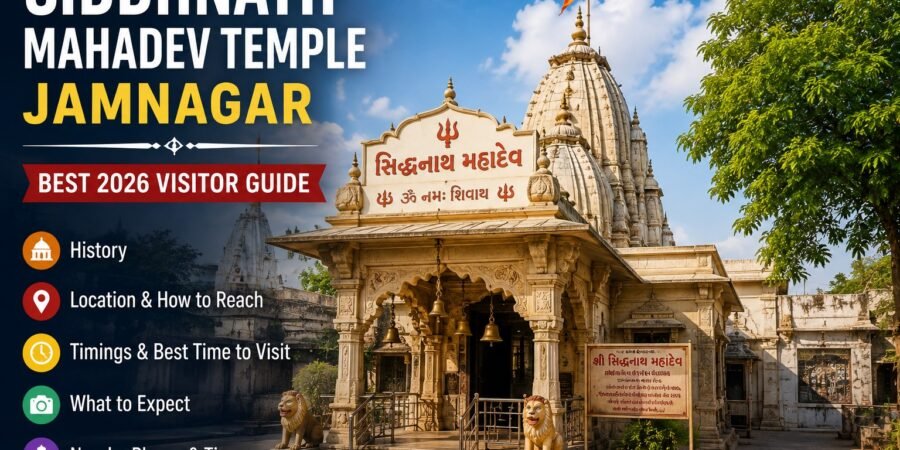
Siddhnath Mahadev Temple: Best 2026 Visitor Guide
Part of our complete Jamnagar city guide.
Siddhnath Mahadev Temple is a Shiva shrine in Jamnagar that locals visit for its quiet and its age, not for grand architecture. It doesn’t get the footfall of Jamnagar’s better-known temples, and that’s part of the appeal. If you want a temple visit that feels unhurried, this is one to put on the list.
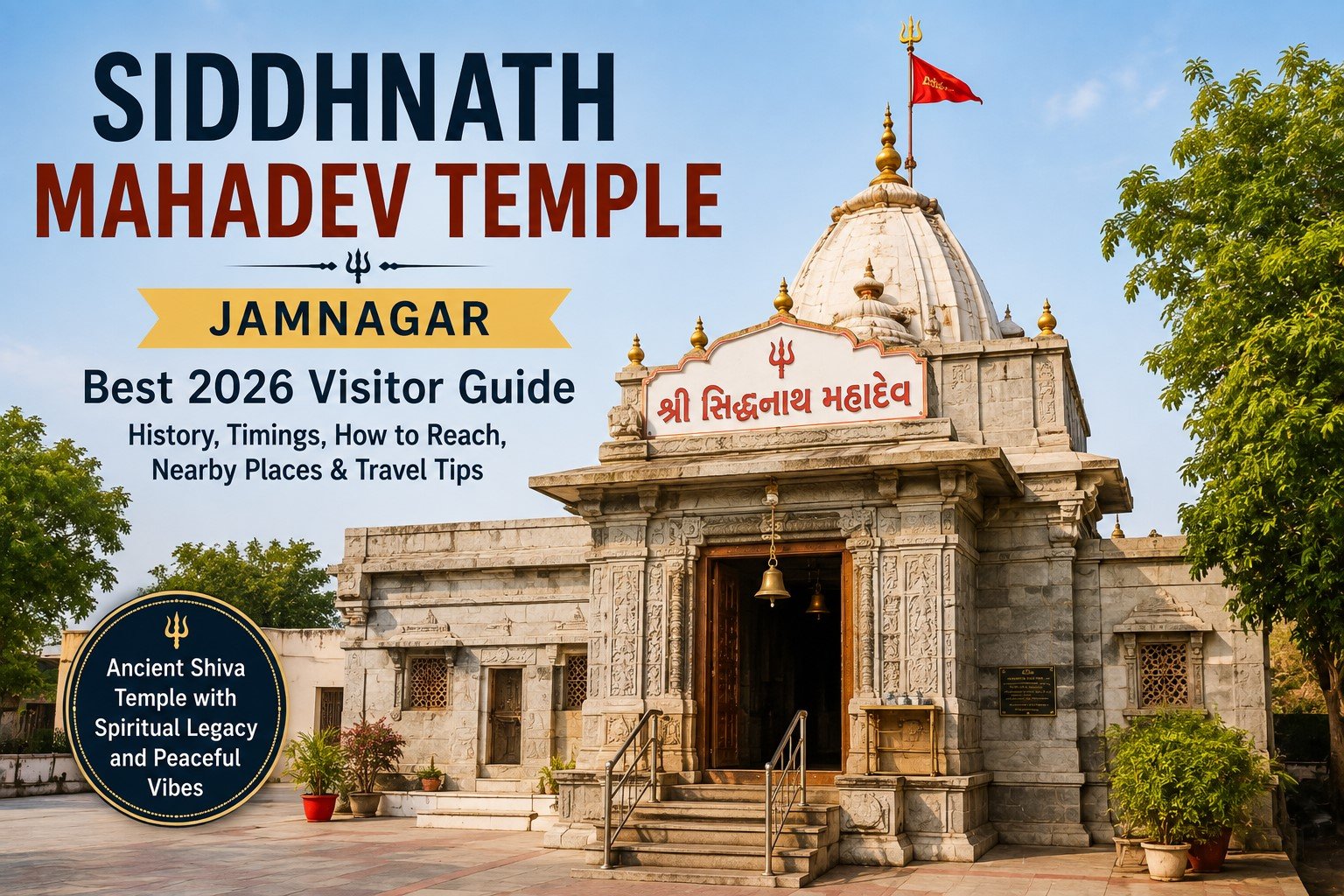
Siddhnath Mahadev Temple: A Short History
Jamnagar itself was founded in the 1540s by Jam Rawal, the ruler who moved his capital from Nawanagar’s earlier site. But several Shiva temples in and around the city are said to predate the city’s founding — Siddhnath Mahadev Temple is often mentioned in that group, alongside temples like Bhidbhanjan Mahadev.
There’s no official plaque giving an exact founding year, and that’s fine. What matters more to regular visitors is the story attached to the site — a local tradition of a sage or seer (a siddha) associated with the shivling here, which is where the name comes from. Treat the legend as legend. Treat the devotion as real. Both things can be true at once.
Where the Temple Is Located
The temple sits within the Jamnagar area, reachable by a short auto-rickshaw or cab ride from the city center. It isn’t on the main tourist circuit that runs through Lakhota Lake and Bala Hanuman, so it stays low-key even on a weekend.
If you’re coming from the railway station or from Digvijay Gate, the simplest approach is to just tell your driver “Siddhnath Mahadev” — it’s a known name locally, even if it doesn’t show up prominently on every map app. Confirm the route on Google Maps before you set out, since small lanes near older temples can be tricky to navigate on your own.
Temple Timings and What to Expect
Like most Shiva temples in the region, Siddhnath Mahadev Temple opens early, well before sunrise for the first aarti, and stays open through the morning and again in the evening. There’s usually a midday gap when the temple closes for a few hours. Timings shift during festivals, so it’s worth a quick call or a check with locals before you plan a specific hour.
Inside, don’t expect marble halls or elaborate carvings. Expect a modest sanctum, a shivling worn smooth by generations of abhishek, and an atmosphere that feels closer to a village shrine than a city landmark. That’s not a complaint. It’s the point.
- Remove footwear before entering the temple premises
- Photography inside the sanctum is often restricted — ask before you shoot
- Carry small change for offerings; card payments aren’t common here
- Modest clothing is expected, as at any Shiva temple in Gujarat
Best Time to Visit Siddhnath Mahadev Temple
Two windows stand out. The Shravan month, which usually falls between July and August, brings a steady stream of devotees doing the Monday fasts and evening visits typical of that period. Mahashivratri, in late winter, is the other big one — expect longer queues, extra stalls outside, and a livelier crowd than any regular Monday.
Outside of these, mornings are the calmest time to go. Early light, fewer people, and the temple bell without a crowd around it. If you’d rather skip lines entirely, avoid Mondays during Shravan and go on a weekday instead.
Nearby Places to Combine With Your Visit
Jamnagar rewards a slow day out, and Siddhnath Mahadev Temple pairs easily with a few other stops. Bhidbhanjan Mahadev Temple, another old Shiva shrine in the city, makes sense to visit the same day — read the Bhidbhanjan Mahadev Temple guide for timings and access details there too.
If wildlife and conservation interest you more than temple-hopping, Vantara is now one of the region’s biggest draws — see the Vantara Jamnagar guide for what it actually involves before you go. And once you’re done for the day, you’ll need somewhere to eat and stay. The list of best restaurants in Jamnagar and the best hotels in Jamnagar for 2026 both cover the practical side of a longer visit.
Tips for Visiting Siddhnath Mahadev Temple
Go early if you can. Mornings are cooler, quieter, and the temple feels most itself before the day’s traffic and heat set in.
Ask around. Locals near the temple know the history better than any signboard does, and most are happy to share it if you ask politely. Don’t rush the visit just to check a box on an itinerary — sit for a few minutes if the space allows it. And if you’re visiting during a festival, arrive with patience built in; queues at older, smaller temples move slower than at big tourist sites, simply because there’s less infrastructure managing the crowd.
For general context on Jamnagar’s history and geography, the Wikipedia entry on Jamnagar is a solid starting point, and the Gujarat Tourism website lists official information on temples and heritage sites across the state.
FAQ
Is Siddhnath Mahadev Temple open to all visitors?
Yes. It’s a public Shiva temple, open to devotees and visitors of any background. Basic temple etiquette applies — footwear off, modest dress, quiet inside the sanctum.
How do I reach Siddhnath Mahadev Temple from Jamnagar city center?
An auto-rickshaw or cab from areas like Digvijay Gate or the railway station is the easiest option. It’s a known name locally, so most drivers can find it even without a precise address.
Confirming the route with a maps app before you leave saves time.
What is the best time of year to visit?
Shravan month and Mahashivratri bring the biggest crowds and the strongest devotional atmosphere. For a calmer visit, go on an ordinary weekday morning outside these periods.
Is there an entry fee?
No. Like almost all public Shiva temples in Gujarat, entry is free. Donations toward temple upkeep are welcome but not required.
Can I combine this with other Jamnagar attractions in one day?
Easily. Pair it with Bhidbhanjan Mahadev Temple in the morning, then head toward Lakhota Lake or plan a separate day for Vantara, since that site alone needs several hours.